
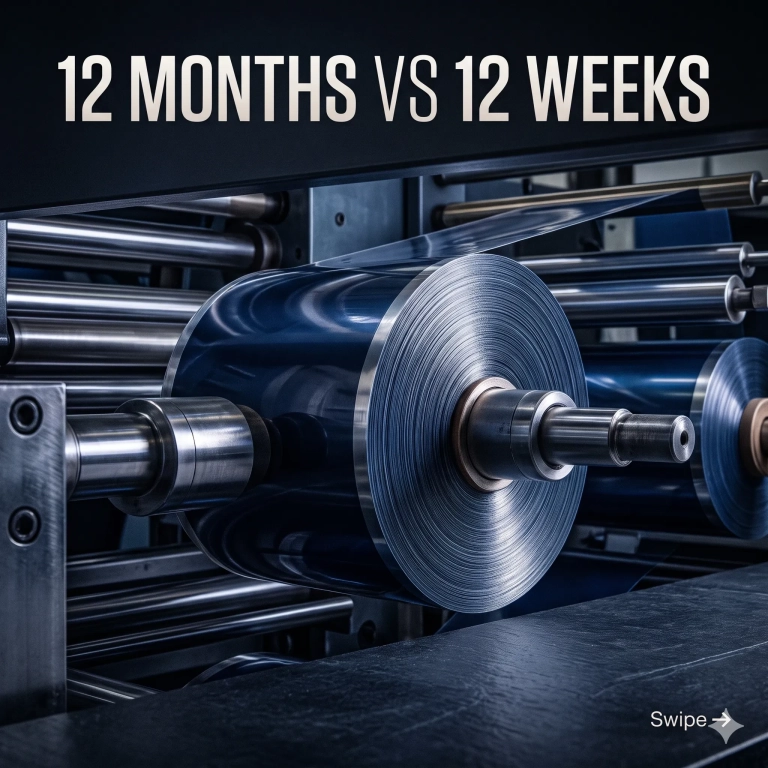
Replacing engineered coextruded liners with poorly specified biodegradable films can quietly slash your product shelf life from 12 months down to 12 weeks.
Look at the technical reality behind film selection. When industrial processors swap engineered barrier packaging for unverified alternatives without analyzing permeability, catastrophic OTR/WVTR spikes occur. What seems like a quick sustainable swap quickly leads to micro-pinholing, delamination, and rapid degradation of sensitivity-prone goods during storage.
True packaging performance relies on precise polymer architecture. Engineered recyclable bulk liners utilize coextruded layers of HDPE and LDPE combined with EVOH barrier resins to lock out oxygen and moisture. Preventing technical issues like tie-layer failure and gauge band variation is what maintains product safety across global supply chains.
Sustainability should never compromise product protection. By relying on coextrusion engineered to exact technical standards, manufacturers safeguard both quality and long-term shelf stability.
How is your procurement team validating barrier integrity for critical shipments? Let us know in the comments below, or contact our technical team to review your liner specifications.
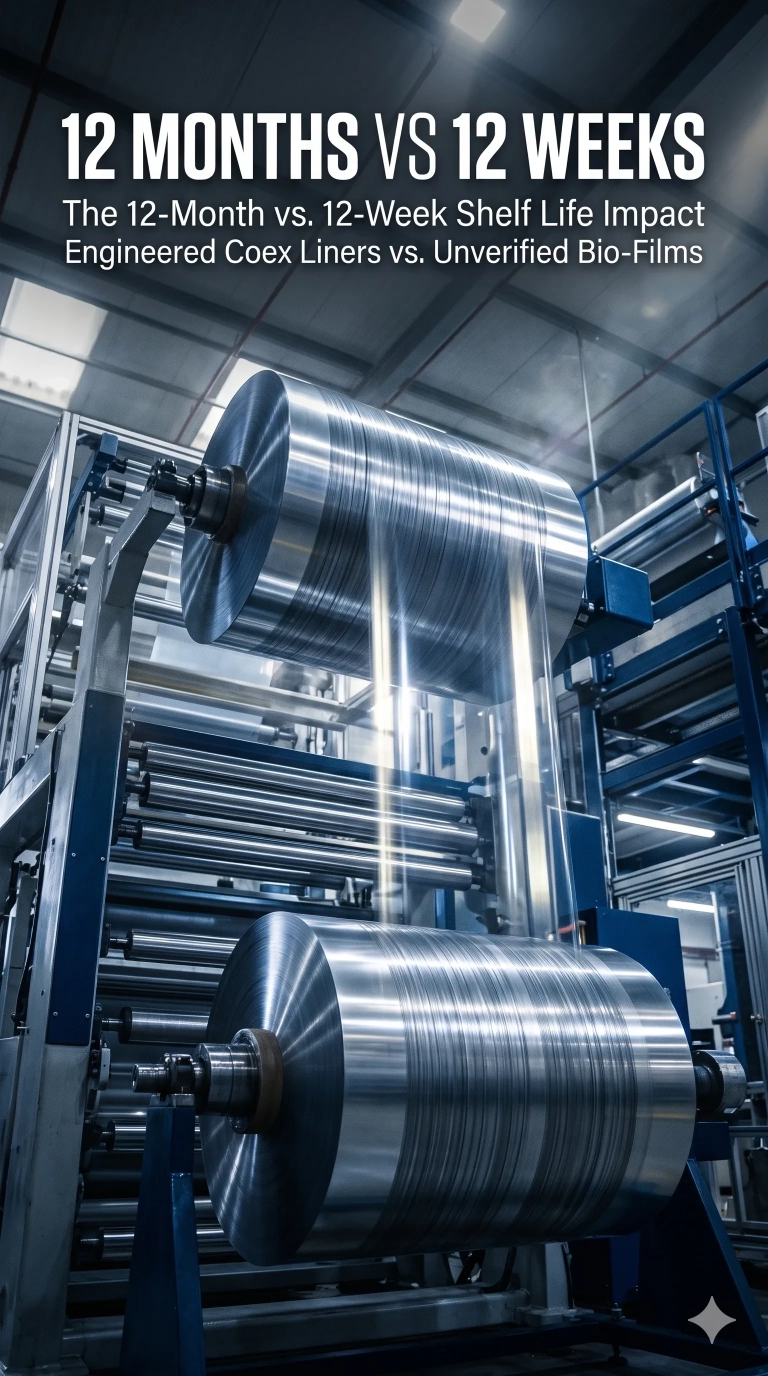
Replacing engineered coextruded liners with poorly specified bio-films can plunge product shelf life from 12 months down to just 12 weeks.
Unverified film alternatives frequently cause severe OTR/WVTR spikes, pinholing, and tie-layer failure. Without coextruded layers of HDPE and LDPE combined with EVOH barrier resins, bulk protection degrades fast.
At Gel Poly Pack, our ISO 9001:2008 certified barrier liners ensure maximum shelf-life security.
Reply directly if interested!
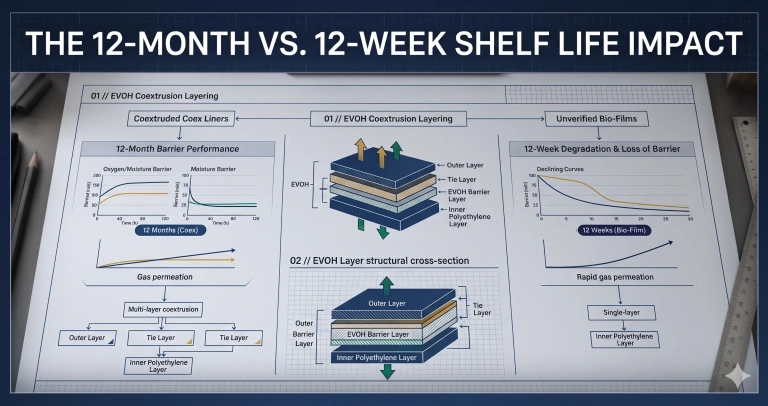
Replacing engineered coextruded liners with poorly specified biodegradable films can drop product shelf life from 12 months down to 12 weeks.
In bulk industrial packaging, good intentions don’t offset polymer physics. When barrier specifications are compromised, immediate OTR/WVTR spikes follow. Without proper coextrusion, issues like tie-layer failure and pinholing expose sensitive industrial goods to moisture and atmospheric oxygen long before reaching the destination.
To prevent severe barrier degradation, high-performance industrial packaging must maintain strict processing controls:
– Multi-Layer Resin Coextrusion: Utilizing coextruded layers of HDPE and LDPE combined with EVOH barrier resins creates an impermeable shield against atmospheric transfer.
– Blow-Up Ratio (BUR) Calibration: Controlling BUR and eliminating gauge band variation ensures consistent wall density across the entire bulk liner.
– Micro-Defect Control: Minimizing gel count and preventing die lip buildup during extrusion eliminates microscopic leak paths before production runs ship.
Under the leadership of Mr. Hardik B. Ramani, Gel Poly Pack maintains rigorous manufacturing standards backed by ISO 9001:2008 and ISO 13485:2016 certifications. Reliable protection requires precision polymer engineering—not unverified material substitutions.
How is your procurement team balancing long-term barrier requirements against sustainability goals this year?